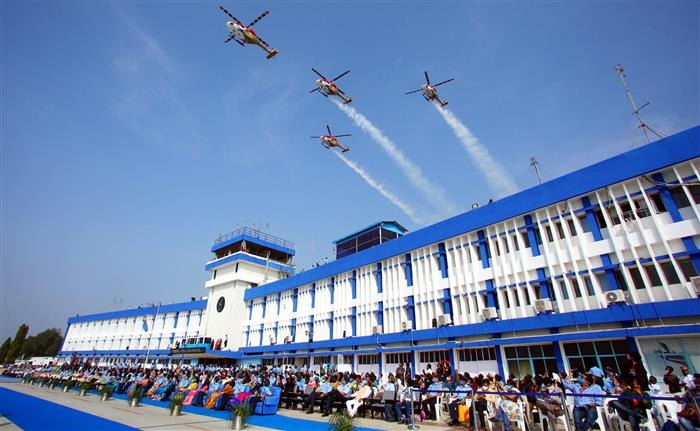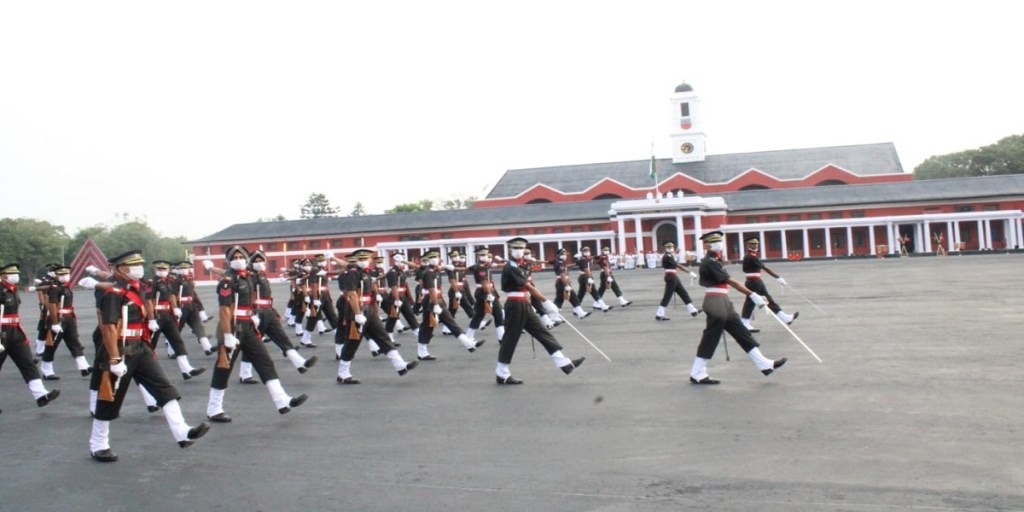
India’s defence examinations are not merely competitive tests; they are pathways to leadership, honour, discipline, and lifelong service to the nation. For generations, institutions like the National Defence Academy, Indian Military Academy, Air Force Academy, and Officers Training Academy have produced leaders who have safeguarded India’s sovereignty and values.
Every year, lakhs of aspirants prepare for NDA, CDS, AFCAT, CAPF, and Agniveer recruitment, but only a small percentage finally wear the uniform. The difference between success and failure lies not in talent alone, but in the right strategy, disciplined preparation, physical fitness, mental conditioning, and clarity of purpose.
NDA Exam Complete Strategy for Beginners
What is the NDA Exam?
The National Defence Academy (NDA) examination is conducted by UPSC twice a year for Class 12 pass or appearing candidates who aspire to join the Indian Army, Navy, and Air Force as commissioned officers.
NDA is the earliest and most prestigious gateway to an officer’s career, where young cadets are trained together before moving to their respective service academies.
NDA Exam Pattern
- Mathematics – 300 marks
- General Ability Test (GAT) – 600 marks
- SSB Interview – 900 marks
Total selection is based on written exam + SSB + medical fitness.
NDA Beginner’s Preparation Strategy
Step 1: Understand the Syllabus Clearly. Before opening any book, understand what to study and why.
Mathematics
- Algebra
- Trigonometry
- Geometry
- Mensuration
- Calculus
- Statistics
General Ability Test (GAT)
- English (Grammar, Vocabulary, Comprehension)
- Physics
- Chemistry
- History
- Geography
- Polity
- Current Affairs
- Defence awareness
Step 2: Build Strong Basics (First 3 Months). For beginners, NCERT is the Bible.
- NCERT Mathematics (Class 9–12)
- NCERT Science for Physics & Chemistry
- Daily English reading (newspapers, editorials)
- Static GK + current affairs notes
Strong fundamentals reduce fear, improve speed, and build confidence.
Step 3: Physical & Mental Conditioning. NDA demands officer-like fitness from Day One.
- Daily running (2–4 km)
- Push-ups, sit-ups, chin-ups
- Yoga, stretching, breathing exercises
- Early rising habit
- Time-bound routine
Physical fitness directly improves mental stamina and discipline—both critical for NDA and SSB.
Step 4: Mock Tests & Revision.
- Weekly sectional tests
- Monthly full-length mock tests
- Maintain an error analysis notebook
- Revise mistakes repeatedly
Beginner’s Mistakes to Avoid
❌ Ignoring Mathematics
❌ Studying without a timetable
❌ No physical training
❌ Memorising instead of understanding
CDS Preparation Roadmap for Graduates & Working Professionals
What is CDS? The Combined Defence Services (CDS) examination is conducted by UPSC for graduates seeking entry into:
- Indian Military Academy (IMA)
- Officers Training Academy (OTA)
- Indian Naval Academy (INA)
- Air Force Academy (AFA)
It is ideal for college students and working professionals who have developed maturity and discipline.
CDS Exam Pattern
- English – 100 marks
- General Knowledge – 100 marks
- Elementary Mathematics – 100 marks
(OTA candidates: English + GK only)
Smart CDS Study Plan (2–3 Hours Daily)
Morning (30 minutes)
- Newspaper reading
- Defence & national current affairs
Evening (1–1.5 hours)
- One subject per day
- Alternate Maths and GK
Night (30 minutes)
- Revision
- Practice MCQs
Why Working Professionals Excel in CDS
✔ Time management skills
✔ Mental maturity
✔ Decision-making ability
✔ Leadership exposure
AFCAT Study Plan in 60 Days.
What is AFCAT?. The Air Force Common Admission Test (AFCAT) selects officers for Flying, Ground Duty (Technical & Non-Technical) branches of the Indian Air Force.
AFCAT Exam Sections
- General Awareness
- Verbal Ability in English
- Numerical Ability
- Reasoning & Military Aptitude
60-Day AFCAT Study Plan
Days 1–20: Foundation Phase
- Quantitative basics
- English grammar & vocabulary
- Static GK (Defence, Geography, Polity)
Days 21–40: Practice Phase.
- Section-wise mock tests
- Reasoning speed improvement
- Air Force–specific current affairs
Days 41–60: Revision Phase
- Full-length AFCAT mocks
- Previous year questions
- Time management mastery
AFCAT Success Tips
✔ Accuracy over attempts
✔ Daily formula revision
✔ Practice computer-based tests
Agniveer Scheme: Eligibility, Benefits & Career Path
What is the Agniveer Scheme?. Under the Agnipath Scheme, youth are recruited as Agniveers in the Indian Army, Navy, and Air Force for a 4-year service tenure.
Eligibility
- Age: 17.5 – 21 years
- Education: Class 10 / 12 (trade-specific)
- Physical & medical fitness mandatory
Benefits of Agniveer Scheme.
Monthly salary ₹30,000–40,000
- ₹11.71 lakh Seva Nidhi Package
- 25% opportunity for permanent absorption
- Preference in CAPF, police, PSUs, private sector
Career Path After Agniveer
- Permanent Armed Forces
- CAPF (BSF, CRPF, CISF, ITBP)
- State Police
- Corporate security & leadership roles
How to Crack SSB Interview in First Attempt
What is SSB? The Services Selection Board (SSB) assesses a candidate’s Officer Like Qualities (OLQs) over a 5-day scientific evaluation process.
SSB 5-Day Procedure
Screening Test (OIR + PPDT)
- Psychology Tests (TAT, WAT, SRT)
- GTO Tasks
- Personal Interview
- Conference
Key Officer Like Qualities (OLQs)
- Leadership
- Responsibility
- Communication skills
- Decision-making
- Emotional stability
- Integrity
First-Attempt SSB Success Formula
✔ Be original, not artificial
✔ Practice narration & group discussion
✔ Improve general awareness
✔ Stay calm and confident
Conclusion
Discipline is the Real Strategy. Cracking defence examinations is not about shortcuts or luck. It is about:
- Consistent preparation
- Physical and mental fitness
- Ethical conduct
- Leadership mindset
At Pride of Odisha Persona Academy, we believe that every disciplined youth carries the potential to become an officer. With the right guidance, dedication, and values, the uniform is achievable. “Service before self is not a slogan; it is a way of life.”
Jai Hind